Boat Database » AB Inflatables Profile F 14
AB Inflatables Profile F 14
Outboard four-stroke, Unleaded, 1x 150 HP
Power Boats 2016 AB Inflatables Profile F 14: How to Choose, Set Up, and Get the Most from a Compact Rigid Inflatable Boat
If you’re looking at the 2016 AB Inflatables Profile F 14, you’re probably trying to solve a pretty common boating pro...
Discover
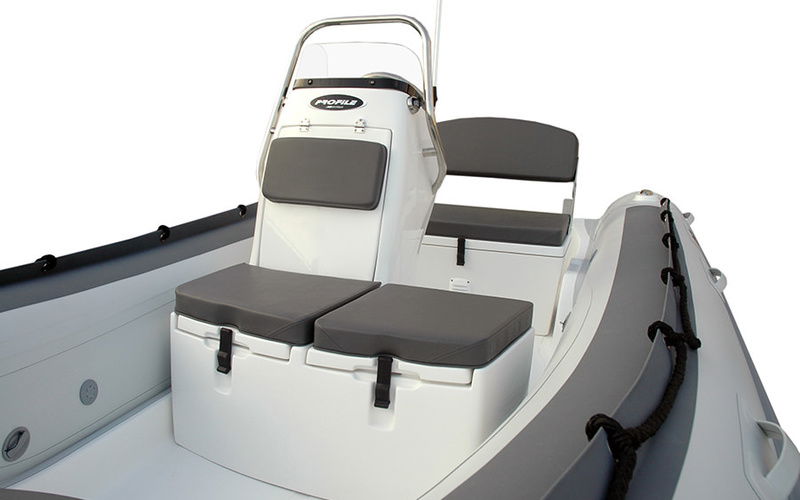


Images have been gathered from various sources and belong to their respective owners.
Review - AB Inflatables Profile F 14

MarineBroker
01/16/2024, 6:55 AM
2016 AB Inflatables Profile F 14: How to Choose, Set Up, and Get the Most from a Compact Rigid Inflatable Boat
If you’re looking at the 2016 AB Inflatables Profile F 14, you’re probably trying to solve a pretty common boating problem: you want a small inflatable boat that’s easy to handle, stable on the water, and practical enough for real use without turning every outing into a hassle. That’s exactly where a 14-foot rigid inflatable boat can make a lot of sense.
The challenge, though, is that compact RIBs can be a little misleading. On paper, they look simple—lightweight, portable, and efficient. In real life, the difference between a boat that feels great and one that feels frustrating often comes down to setup, load planning, engine matching, and how you use it day to day. A boat like the 2016 AB Inflatables Profile F 14 can be a smart choice, but only if it matches your needs and you know how to get the best performance from it.
In this guide, we’ll break down what makes this boat appealing, the most common issues owners and buyers run into, and practical ways to solve them. Whether you’re researching a purchase, trying to improve performance, or just want to understand compact RIB ownership better, this article will help you make a more confident decision.
- What Makes the 2016 AB Inflatables Profile F 14 Stand Out
The 2016 AB Inflatables Profile F 14 sits in a sweet spot for boaters who want a manageable size without giving up the stability that inflatable boats are known for. At 14 feet, it’s compact enough to trailer, store, and launch with less stress than a larger hull, but it still offers the benefits of a rigid inflatable design.
That combination matters more than many first-time buyers realize. A rigid hull gives the boat better handling and tracking than a soft-bottom inflatable, while the inflatable tubes add buoyancy and confidence when boarding, docking, or moving at low speeds.
For many users, the appeal is simple:
- Easier to transport than a larger center console or runabout
- More stable than a basic aluminum tender
- Versatile enough for tender duty, harbor runs, fishing, and family use
- Efficient when paired with the right outboard
If you’re comparing boats in this size range, the Profile F 14 is often attractive because it aims to balance performance and practicality. That balance is usually the main reason people start looking at boats like this in the first place.
- The Most Common Problem Buyers Face with a 14-Foot RIB
The biggest issue people run into with a boat like the 2016 AB Inflatables Profile F 14 is not the boat itself—it’s mismatched expectations.
A 14-foot RIB is not a “do everything” boat. It’s a compact platform, and that means it performs best when used within its limits. People sometimes expect it to handle rough water like a much larger vessel, carry too much gear, or plane effortlessly with an underpowered engine. That’s where disappointment starts.
Common pain points include:
- Too much weight onboard
- Wrong outboard size or propeller choice
- Poor trim setup
- Inflatable tube maintenance being overlooked
- Storage and transport challenges that weren’t planned for
In other words, the problem is usually about fit and setup, not just the boat model. The good news is that these issues are very manageable once you understand how the boat is meant to be used.
- Who the 2016 AB Inflatables Profile F 14 Is Best For
This boat tends to work well for people who want a practical, compact, and stable inflatable with real-world usefulness.
It’s a strong match for:
- Yacht owners needing a dependable tender
- Coastal boaters who make short trips between docks and anchorages
- Families who want an easy-entry, stable small boat
- Anglers who need a simple platform for calm-water fishing
- Owners with limited storage space who still want a quality RIB
It may not be the best fit if you need:
- High-capacity offshore capability
- Long-distance cruising comfort
- Heavy payload performance
- A boat that stays in the water full-time without regular care
The key is knowing what you want the boat to do. If your goal is a nimble, practical, easy-to-manage inflatable with good stability, this size and style make a lot of sense.
- How to Match the Right Outboard to the 2016 AB Inflatables Profile F 14
One of the most important parts of getting good performance from the 2016 AB Inflatables Profile F 14 is choosing the right engine setup.
A compact RIB can feel sluggish with too little power, but it can also become twitchy or inefficient if the engine is too large or poorly matched. That’s why outboard selection matters so much.
Here’s what to think about:
- Power needs: Enough horsepower to plane comfortably with your typical load
- Weight of the engine: A heavier motor affects trim and stern squat
- Propeller selection: The wrong pitch can hurt acceleration and top speed
- Typical use: Tender duty, fishing, or family cruising all affect setup
A good rule of thumb is to think about your normal load, not your ideal load. If you usually carry two adults and light gear, your needs are very different than if you regularly carry four adults, fuel, coolers, and equipment.
Practical setup tips:
1. Don’t size the engine based only on top speed.
2. Make sure the propeller lets the boat get on plane without struggling.
3. Test trim positions at different loads.
4. Keep weight centered and avoid overloading the stern.
If the boat feels slow to accelerate, porpoises, or struggles in turns, the issue may be engine match rather than hull design.
- Loading the Boat Correctly Makes a Bigger Difference Than Most People Think
A lot of boat performance complaints come down to loading, not hardware. With a small RIB like the 2016 AB Inflatables Profile F 14, where you place people and gear can completely change how the boat handles.
Because the boat is compact, weight distribution has a bigger impact than it would on a larger vessel. A few extra items in the wrong place can affect planing, steering, and fuel efficiency.
Keep these basics in mind:
- Put the heaviest items low and near the center
- Avoid stacking weight too far aft
- Balance passengers as evenly as possible
- Store gear securely so it doesn’t shift underway
- Keep unnecessary equipment off the boat
A simple example: if you load a cooler, battery, anchor, and extra fuel all at the stern, the boat may sit lower in the water and struggle to accelerate. Move some of that weight forward or toward the center, and the ride often improves immediately.
This is one of the easiest fixes available, and it costs nothing.
- Handling and Ride Comfort: What to Expect from a Compact RIB
One reason people look at rigid inflatable boats is the ride. The inflatable tubes can soften impact and improve stability at rest, which is a big deal when boarding from a dock or using the boat as a tender.
That said, a 14-foot RIB still has limits. In short chop, the ride can be busy if you push too hard. Comfort depends on speed, sea conditions, weight, and how well the boat is trimmed.
To improve the ride:
- Reduce speed in rougher water
- Trim the engine correctly
- Keep passengers seated when conditions are uneven
- Avoid overloading
- Use smooth throttle inputs instead of sudden acceleration
If you’re coming from a larger boat, the smaller size may feel more responsive and a little less forgiving. That’s normal. The solution is not to fight the boat, but to use it in a way that suits its size.
- Maintenance Tips for the 2016 AB Inflatables Profile F 14
A compact inflatable boat can stay in great shape for years if you stay on top of basic maintenance. The good news is that most of the important tasks are simple and don’t require a huge time commitment.
Focus on these areas:
- Tube care: Rinse salt and grime off regularly
- Hull inspection: Check for damage, scrapes, or wear
- Valve checks: Make sure inflation valves seal properly
- Seams and glue lines: Watch for signs of aging or lifting
- Outboard maintenance: Follow the engine service schedule
- Fuel system care: Use clean fuel and inspect lines and fittings
A few smart habits go a long way:
1. Rinse the boat after saltwater use.
2. Dry it before storage to reduce mildew.
3. Keep it out of direct sun when possible.
4. Inspect the tubes before every outing.
5. Don’t ignore small leaks or soft spots.
Inflatable boats are durable, but they reward consistency. A little upkeep now prevents bigger problems later.
- Storage and Transport: Making Ownership Easier
One of the biggest advantages of the 2016 AB Inflatables Profile F 14 is that it’s easier to manage than a full-size boat. But “easier” doesn’t mean “effortless.”
The way you store and transport the boat affects how long it lasts and how enjoyable ownership feels. If storage is awkward, the boat may get used less. If transport is annoying, even a great boat can become a burden.
Helpful storage ideas:
- Keep the boat covered when not in use
- Store it in a shaded, dry location
- Avoid prolonged exposure to UV and heat
- If deflated for storage, follow the manufacturer’s folding guidance
- Don’t place heavy objects on top of the tubes
For transport, think ahead about:
- Trailer compatibility
- Tie-down points
- Launching and retrieval routine
- Whether you’ll keep the boat inflated or partially deflated
If you’re using it as a tender, storage can be even more important. A boat that’s easy to deploy is far more likely to be used regularly.
- How to Tell If the 2016 AB Inflatables Profile F 14 Is the Right Fit for You
Before buying or relying on any small RIB, it helps to ask a few practical questions.
Consider the following:
- How many people will usually be onboard?
- What’s the heaviest load you’ll carry?
- Will you use it mostly in calm water or mixed conditions?
- Do you need portability more than speed?
- Is the boat for short trips, tender duty, or general recreation?
If your answers point toward short-range use, moderate loads, and a need for easy handling, this boat size is likely a good fit.
If you regularly need more room, more range, or more offshore capability, you may want to step up to a larger model. That’s not a knock on the Profile F 14—it just means the boat should match the mission.
- Practical Ways to Improve Performance Right Away
If you already own or are considering the 2016 AB Inflatables Profile F 14, there are a few easy ways to get better results without making major changes.
Try these first:
- Clean the hull and tubes to reduce drag
- Check engine height and trim
- Make sure the propeller is appropriate for your load
- Remove unnecessary gear
- Keep the boat properly inflated
- Inspect for waterlogged gear or extra weight
You may be surprised how much better the boat feels after just a few small adjustments. Many owners focus on horsepower first, but setup and maintenance often deliver the biggest gains.
- Common Mistakes to Avoid with Small RIBs
A lot of frustration with small inflatables comes from avoidable mistakes. If you’re using a boat like the 2016 AB Inflatables Profile F 14, avoiding these issues can make ownership much smoother.
Common mistakes include:
- Overloading the boat
- Ignoring tube pressure
- Using the wrong propeller
- Skipping routine rinsing and inspection
- Storing the boat in harsh sun for long periods
- Expecting offshore performance from a compact hull
The fix is usually straightforward: respect the boat’s size, keep up with maintenance, and set it up for the way you actually use it.
- Final Thoughts on the 2016 AB Inflatables Profile F 14
The 2016 AB Inflatables Profile F 14 is a solid example of what a compact rigid inflatable boat can do well: provide stability, portability, and practical everyday use in a manageable size. The main challenge for most owners is not the boat itself, but making sure it’s matched to the right engine, load, and use case.
If you keep weight balanced, maintain the tubes and outboard, and use the boat within its limits, it can be a very capable small RIB. For boaters who want something easy to launch, easy to store, and versatile enough for tender duty or short trips, it’s a smart size to consider.
If you’re still comparing options, take a close look at how you plan to use the boat day to day. That’s usually the fastest way to find the right fit and avoid costly disappointments later.
Specifications
General
Boat Type: Power Boats
Class Type: Rigid Inflatable Boats
Specifications
Length: 14.01
Beam: 6.36
Draft: 1.67
Hull Material: GRP
Build
First Built: 2016
Propulsion
Fuel Type: Unleaded
Engines: 1
Power: 150 HP
Brand: Unknown
Accomodation
PROS & CONS
What we appreciated
 Durable and high-quality Hypalon material for tubesLightweight and easy to transportGood stability and performance for its sizeSpacious layout with comfortable seatingSuitable for a variety of activities including fishing and leisure cruising
What we didn’t appreciate
 Limited storage space compared to larger boatsNot ideal for rough open sea conditionsSmaller engine options may limit speed and powerRequires regular maintenance to keep Hypalon tubes in top conditionHigher price point compared to some competitors in the same class
Upkeep Costs
Fuel: Approximately $1,200 - $2,500 per year depending on usage and engine size
Maintenance: Around $500 - $1,000 annually for engine servicing, hull checks, and repairs
Insurance: Typically $300 - $700 per year depending on coverage and location
Storage: $500 - $1,200 annually depending on marina or dry storage facility
Registration and Licensing: $50 - $150 per year depending on state or country regulations

Rating
4.8
User
Score
Score
Driveability
Technology
Interior
Design
Similar Boats


MarineBroker
Download now for an immersive boat experience like never before! ⛵✨ Your journey begins with a simple click. 🌊📲
#SetSailSmart #DownloadNow
#SetSailSmart #DownloadNow

Subscribe
Copyright 2017 - 2026, Marinebroker.net, All Rights Reserved